








Best Workout Clothes for Pilates in 2026: What to Wear to Reformer and Mat Classes
The best workout clothes for Pilates in 2026 are fitted, seamless, and stretchy enough to move with you through every twist, reach, and fold. Prioritize squat-proof leggings or mid-length biker shorts, a low to medium support sports bra, a fitted crop top that stays put when you invert, and grippy socks. Save the baggy tees and loose shorts for a rest day.
Pilates is the fastest-growing fitness category among women ages 20 to 35 right now, and the wrong outfit will absolutely sabotage your class. Reformer springs snag on loose fabric. Oversized shirts fall over your face the second you roll down into a teaser. Regular gym leggings with thick seams dig in when you are in short spine stretch for the fifth time. What looks cute on the squat rack can be a disaster in a Pilates studio, and what works in Pilates is a different beast entirely.
This is the complete 2026 guide to choosing Pilates clothes that actually perform. We cover what to wear to reformer class, mat class, and wall Pilates, how Pilates clothes differ from regular gym wear, which leggings stay up during inversions, and the pieces from Violate The Dress Code that our athletes reach for on Pilates days.
What Are the Best Workout Clothes for Pilates in 2026?
The best workout clothes for Pilates in 2026 are fitted, form-hugging pieces that do not shift, ride up, or bunch when you move through a full range of motion. That means squat-proof seamless leggings or mid-length biker shorts, a close-fitting tank or crop top, a low to medium support sports bra, and grip socks. No hoods, no oversized shirts, no anything that can flop over your face when you invert.
Pilates is built around controlled, precise movement. Your instructor needs to see your alignment clearly to correct your form, which means baggy clothing literally blocks them from doing their job. A good Pilates outfit does three things at once. It stays put during inversions so you are not tugging at hems. It hugs your body so your instructor can see whether your hips are square. It flexes with you through deep ranges of motion without choking your waist or cutting into your shoulders.
Why does loose clothing fail in Pilates?
Loose clothing fails in Pilates for three specific reasons. First, the reformer has moving carriage straps and springs that grab at fabric, which can pull on a loose hem and throw off your form mid-rep. Second, inverted positions like short spine, bridge variations, and jackknife will flip a loose t-shirt over your head, leaving you blind. Third, Pilates trains small, deep stabilizer muscles that instructors cue visually, so fabric that hides your core line prevents them from giving you real feedback.
How Is Pilates Clothing Different From Regular Gym Clothes?
Pilates clothing is different from regular gym clothes in three ways. It prioritizes flexibility over heavy compression, places seams outside of pressure zones so they do not dig in during floor work, and uses softer, more pliable fabric that accommodates deep spinal and hip flexion without resistance. Most standard lifting leggings are too compressive for full Pilates range of motion.
The best Pilates clothes use seamless or flatlock construction because you spend a significant amount of class on your back, side, and stomach. Every chunky seam becomes a pressure point when you are doing side-lying leg series for three minutes straight. Seamless fabric is not a style preference here. It is a functional requirement.
| Workout Type | Best Fabric | Support Level | Recommended Fit |
|---|---|---|---|
| Pilates (Reformer and Mat) | Seamless nylon-spandex, 180-220 GSM | Low to medium | Fitted, form-hugging, non-slip waistband |
| Yoga | Buttery soft poly-spandex | Low | Fitted or slightly relaxed crop |
| HIIT or Cardio | Moisture-wicking mesh panels | High | Compressive, sweat-wicking |
| Heavy Lifting | High-GSM interlock knit, 240-280 GSM | Medium to high | Compressive, squat-proof, structured waistband |
| Running | Lightweight nylon with mesh | High | Compressive, minimal seams, pocketed |
Pilates sits in its own lane. You need enough stretch for full spinal articulation, enough structure so nothing shifts during inversions, and enough softness that an hour on the reformer does not leave red marks on your skin.
What Are the Best Leggings for Pilates in 2026?
The best leggings for Pilates in 2026 are seamless, high-waisted, and made from interlock knit fabric between 180 and 220 GSM. They should be opaque enough to pass a bend-over test under studio lighting, have a wide non-slip waistband that does not roll during roll-ups, and be long enough to cover your ankles on the reformer footbar. Full length and 7/8 are both safe choices. Capris work but can dig into your calf when you invert.
What length of legging works best for Pilates?
Full-length leggings are the safest choice for 90% of classes. They keep your skin off the vinyl of the reformer and mat (more hygienic and more comfortable), they provide visual continuity that helps your instructor track your leg line, and they eliminate the skin-against-strap friction that short shorts cause during footwork. For hot summer sessions, 7/8 length leggings are a reasonable compromise.
Which VTDC leggings work for Pilates?
Three pairs in the Violate The Dress Code catalog are built exactly for this. The Synergy Seamless Leggings use Gen 3.0 seamless knit that stretches with deep hip flexion without losing shape, making them a go-to for reformer work. The Bliss Leggings have a softer hand feel and a V-front waistband that stays flat during roll-downs. The Allure V Front Leggings deliver the clean, elevated look that fits the Pilates princess aesthetic without sacrificing opacity.
If you only buy one pair for Pilates specifically, go seamless. Your spine will thank you somewhere around minute 40 when you are rolling into short spine for the fourth time.
Do You Need a Sports Bra for Pilates?
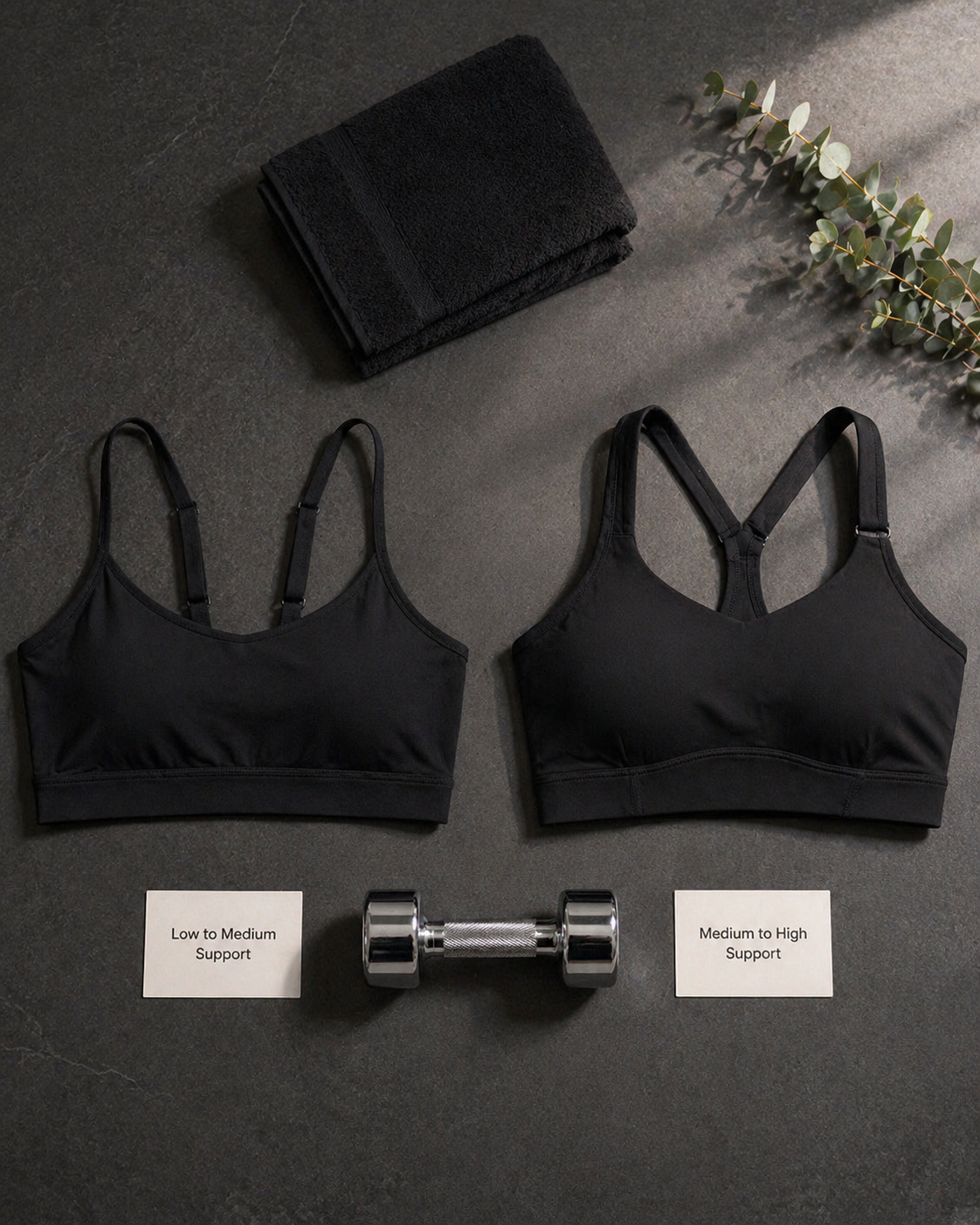
Yes, you need a sports bra for Pilates, but you do not need the high-impact, locked-down kind you would wear for running. A low to medium support sports bra is ideal for almost every Pilates class. The movements are slow, controlled, and low-impact, so compression-style bras that flatten you down unnecessarily just restrict your breathing. And breathing is literally 30% of what Pilates is.
The right Pilates sports bra gives you enough structure so there is no bounce during footwork or jumpboard, a smooth band that does not dig into your ribs during spinal twists, and straps that do not slip off your shoulders when you lift your arms overhead for chest expansion.
Which sports bras work best for Pilates?
For mat classes and classical reformer, a Comfy AF Sports Bra or any low-impact seamless bra from the Sports Bras and Tops collection will serve you perfectly. If you run hot or take jumpboard and cardio-infused reformer classes, bump up to a medium-support option like the Uplift Sports Bra. For C cup and up, look at the Triple Threat Sports Bra or Twist Sports Bra for a bit more lockdown without going into brutal compression territory.
Can You Wear Shorts to Pilates?
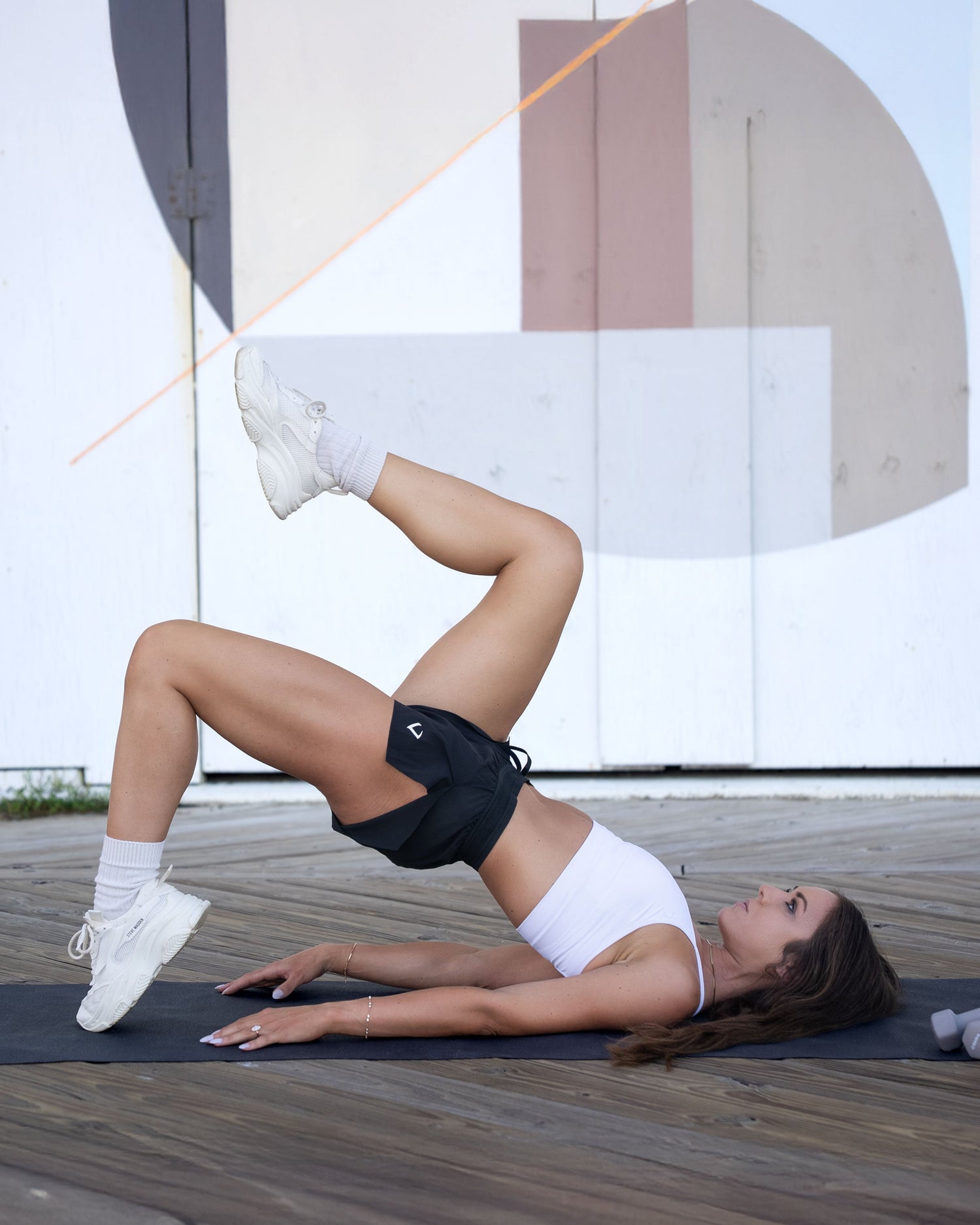
You can wear shorts to Pilates, but they need to be the right kind. Mid-length biker shorts (5 to 8 inch inseam) are the gold standard because they stay in place during inversions, cover enough skin to avoid direct friction with the reformer vinyl, and look clean in class photos. Short shorts with 2 to 3 inch inseams can ride up during footwork and leave you adjusting constantly, which defeats the whole point of a flow class.
Pilates studios tend to run warmer than traditional gyms because most do not use heavy HVAC during class (sound absorption and all that). If you run hot, a seamless biker short is a legitimate move. The Bliss Seamless Shorts and Synergy Seamless Shorts are ideal here because they do not have chunky flatlock seams that irritate skin during side-lying work. The Gym Crush Shorts work for mat classes but are slightly more structured, so they read more gym-to-studio than strict Pilates purist.
When should you choose leggings over shorts?
Choose leggings over shorts for cold studios, reformer-heavy classes, beginner sessions where you might not know what to expect, and any class involving wall Pilates or contraption work where your legs will be pressed against padded surfaces for long stretches. Skin-on-vinyl at minute 45 of a reformer class becomes a sensory issue fast.
What Tops Should You Wear to Pilates?
The best Pilates tops are fitted crops or tanks, roughly 14 to 18 inches in length, in a smooth, four-way stretch fabric. Avoid anything oversized, cropped too short (risk of riding up during inversions), backless (unless you are in a women-only class and comfortable with straps showing), or with loose cowl necks that fall over your face.
A fitted crop gives you three advantages. It shows your waistline so your instructor can cue rib cage position. It stays put when you flip upside down. And it pairs with any high-waist legging without creating a weird muffin top at the waistband.
Which VTDC tops are best for Pilates?
The Essential Crop Top in cream or blue is practically designed for this use case. It is fitted without being tight, has clean stitching, and pairs beautifully with the neutral Pilates princess color palette. The Tease Tank and Tease Crop line works for anyone who wants more coverage with a slightly looser fit through the shoulders. The Bliss Crop is another strong pick for reformer classes because the seams sit outside of shoulder blade contact points.
Do You Need Grip Socks for Pilates?
Yes, most Pilates studios require grip socks for hygiene and safety reasons. Grip socks have rubberized dots or patterns on the sole that prevent slipping on the reformer carriage, box, and jumpboard. Classical Pilates studios are often stricter about this than contemporary ones. Call your studio before your first class or bring a pair just in case.
Pilates grip socks are not currently part of the core Violate The Dress Code lineup, but any brand that offers full-sole grip (not just heel and toe dots) will do the job. Expect to spend $12 to $22 per pair. They are cheap and they last a long time.
Pilates Princess Aesthetic: What Colors and Styles Are Trending in 2026?
The Pilates princess aesthetic in 2026 leans into soft, elevated neutrals like cream, mocha, sand, sage, butter yellow, and matcha green. Matching sets are everywhere. Clean lines dominate over logos. V-waistbands and twist-front detailing are huge. Oversized sweatshirts pulled over matching sets for the post-class coffee run are basically the uniform.
This aesthetic trend maps cleanly to the Allure Collection, which features neutral tones like mocha, navy, and white with elevated silhouettes like skorts, V-front leggings, and long-sleeve backless tops. The Amore Seamless Collection also leans into the softer, more elevated end of the spectrum. For the athlete who prefers a bolder look, the Desire line offers the same performance fabric in more saturated colors that still photograph beautifully against a white studio wall.
How Much Do the Best Workout Clothes for Pilates Cost in 2026?
Expect to spend between $45 and $75 per piece for the best workout clothes for Pilates in 2026. Budget options under $30 tend to lose elasticity within 20 wash cycles and go sheer under stretch. Luxury brands in the $110 plus range are often paying for a logo rather than meaningfully better fabric. Mid-tier brands in the $45 to $75 range hit the sweet spot of fabric density, cut quality, and longevity.
A realistic starter Pilates wardrobe costs between $160 and $220 and includes one pair of seamless leggings, one pair of biker shorts, a sports bra, a fitted crop top, and a pair of grip socks. That gets you at least three full outfit combinations with pieces you can rotate and wash. Free domestic shipping kicks in on Violate The Dress Code orders over $125, so building that starter set in one order makes sense.
What Should You NOT Wear to Pilates?
You should not wear baggy t-shirts, loose shorts, clothing with zippers or metal hardware, heavy sweatshirts, anything with hood strings, dangling jewelry, or shoes during mat or reformer class. Anything that can scratch the reformer vinyl or snag on a spring is out. Anything that blocks your instructor from reading your alignment is out. Anything that flops over your face when you invert is out.
Also skip perfume and heavy lotions. You will be inches away from your instructor and sometimes other students during hands-on cueing. Pilates studios tend to be fragrance-conscious spaces.
What Do Real Customers Say About VTDC for Low-Impact Workouts?
With over 90,000 happy customers across the Violate The Dress Code reviews page, the pattern for Pilates, yoga, and barre users is consistent. Athletes consistently praise the Synergy seamless line for staying put during deep stretches, call out the Bliss leggings for the soft hand feel that works on the reformer, and highlight the Allure collection as the pieces they keep grabbing for studio classes because the look and the performance both hold up.
One common thread in reviews from Pilates and yoga customers is that the seamless pieces fade the transition between activewear and loungewear, meaning you can do the class, grab a matcha, and run errands without needing to change. That is the definition of a good Pilates piece in 2026.
How Do You Transition a Pilates Outfit to the Rest of Your Day?
Transitioning a Pilates outfit to the rest of your day is easier than transitioning any other workout look because the pieces are already fitted, neutral, and designed to read as elevated athleisure. Swap your grip socks for clean sneakers, throw an oversized cropped crewneck or hoodie over your top, add a clean crossbody or tote bag, and you are done.
For a slightly more polished look, pair a matching set from the Amore Seamless Collection with a Sovereign Cropped Crewneck and low-profile white sneakers. You will blend in at a coffee shop, a bookstore, or a casual lunch without anyone clocking you as freshly out of a 7 a.m. class.
Frequently Asked Questions About Pilates Clothes
Can I wear a regular t-shirt to Pilates?
You can technically wear a regular t-shirt to Pilates mat class, but it will flip over your head during inversions like bridge and short spine. For reformer class, a fitted tank or crop is strongly preferred because loose shirts can catch on the carriage straps and springs. If a t-shirt is all you have, tuck it in or tie it at the back.
What is the difference between Pilates clothes and yoga clothes?
Pilates clothes tend to be more fitted, more structured at the waistband, and rely on seamless construction to handle the higher volume of floor work on the reformer. Yoga clothes are often slightly softer and more relaxed, with a focus on buttery-soft hand feel and minimum compression. The two categories overlap significantly but Pilates leans more structured and yoga leans more draped.
Do I need grip socks for Pilates?
Yes, most Pilates studios require grip socks. They prevent slipping on the reformer carriage, jumpboard, and Pilates chair. Expect to pay between $12 and $22 for a quality pair. Call your specific studio before your first class to confirm the policy, since a small number of contemporary studios allow barefoot practice.
Are leggings or shorts better for reformer Pilates?
Full-length leggings are better for reformer Pilates in most situations. They protect your skin from the vinyl carriage during sliding movements, keep your legs warm in cooler studios, and give your instructor a clean visual line for cueing alignment. Biker shorts are a reasonable alternative in summer, but shorter inseams under 5 inches often ride up during footwork.
Can I wear my Pilates outfit to brunch after class?
Yes, a fitted matching set in a neutral color from the Allure or Amore Seamless collections reads as elevated athleisure and works perfectly for brunch, coffee dates, and casual errands. Add an oversized crewneck or cropped hoodie, swap grip socks for sneakers, and the look transitions instantly from studio to street.
How tight should Pilates leggings be?
Pilates leggings should fit like a second skin: snug enough that they do not shift during inversions or roll down during teasers, but not so tight that they restrict your breathing or cut into your waist. A good fit test is a deep squat. If the waistband digs in or the fabric turns sheer, go up a size or choose a different pair. Most Violate The Dress Code leggings run true to size.
Do I need a high-support sports bra for Pilates?
No, you do not need a high-support sports bra for most Pilates classes. Low to medium support is ideal because Pilates is low-impact and your breath work is essential. High-compression bras can restrict the lateral rib expansion that the Pilates method specifically trains. Save the high-impact bras for running, HIIT, and jumping.
What is the Pilates princess aesthetic?
The Pilates princess aesthetic is a 2026 style trend built around matching seamless sets in soft neutral colors (cream, mocha, sand, sage, butter yellow), clean minimal silhouettes, V-waistband leggings, fitted crop tops, and oversized cropped crewnecks layered on top. The look reads elevated, feminine, and effortless rather than sporty or gym-forward.
The Bottom Line on Pilates Outfits in 2026
The right Pilates outfit should disappear the second class starts. You should not feel your waistband during roll-downs, see your top fall over your face during bridges, or fight the carriage because of a loose hem. Fitted, seamless, opaque, and structured around the waist is the formula. Everything else is personal preference.
Whether you are brand new to the reformer or you are five years into a daily practice, the same basic rules apply. Fitted leggings or mid-length biker shorts, a low to medium support sports bra, a fitted crop top, grip socks, and none of the baggy gym stuff that lives in the back of your drawer. Build that kit once and it will serve you for years.

Leave a comment
All comments are moderated before being published.
This site is protected by hCaptcha and the hCaptcha Privacy Policy and Terms of Service apply.