








Best Running Clothes for Women in 2026: What to Wear for Summer Miles, Long Runs, and Race Day
The best running clothes for women in 2026 are sweat-wicking, seamless pieces built for repeated impact: a medium to high support sports bra, anti-chafe seamless shorts or lightweight leggings, and a breathable tank. Prioritize fabric that pulls moisture, a waistband that does not roll, and zero seams where your skin rubs.
Here is the thing most women learn the hard way: the gear you lift in is not automatically the gear you should run in. Lifting rewards compression and a snatched waist. Running rewards airflow, a locked-down chest, and seams placed where nothing chafes over three, six, or thirteen miles. This 2026 guide walks through every layer of a running kit, explains the rules behind each choice, and points you to specific pieces that hold up when the pace and the temperature climb. Whether you run a casual summer loop or train for a fall race, this is what to wear running and why it works.
What Are the Best Running Clothes for Women in 2026?
The best running clothes for women combine four things: a supportive sports bra, bottoms that move with you without riding up, a top that breathes, and fabric that stays dry. Everything else is preference. Get those four right and a $40 piece outperforms a $90 piece that ignores them.
Running is a high-impact, repetitive sport. Your foot strikes the ground roughly 160 to 180 times per minute, and every strike sends force up through your body. That changes your priorities compared to a strength session. You need more chest support, more breathability, and far more attention to friction, because a seam that feels invisible on the squat rack becomes a raw spot at mile four. The brands worth your money in 2026 design around movement and sweat, not just the mirror. Violate the Dress Code builds its seamless lines on exactly that logic, which is why so many of its training pieces cross over to running without missing a beat.
Across the running kit, here are the non-negotiables to look for this year:
- Moisture-wicking fabric that moves sweat off your skin instead of soaking it up.
- Flatlock or fully seamless construction to kill chafe at the inner thigh, underarm, and band.
- A waistband that stays put through a full stride cycle, ideally high-rise and wide.
- The right support level for your body and your distance, not a one-size guess.
- Squat-proof and run-proof opacity so nothing goes sheer when you bend, lunge, or sprint.
How Do You Choose a Sports Bra for Running?
For running, choose a medium to high support sports bra with an encapsulating or compression fit and adjustable or wide straps. Running creates the most vertical breast movement of any common workout, so support matters more here than in almost anything else you do.
Breast tissue can move several inches during a run, and that motion is a leading reason women cut runs short or skip them. The fix is matching support to impact. A light-support bralette is fine for a recovery walk or a yoga flow, but a true run calls for more. Look for a thicker underband that sits snug without digging, straps that do not slip, and either compression (pressing tissue toward the chest) or encapsulation (cradling each side) depending on what feels locked in for you.
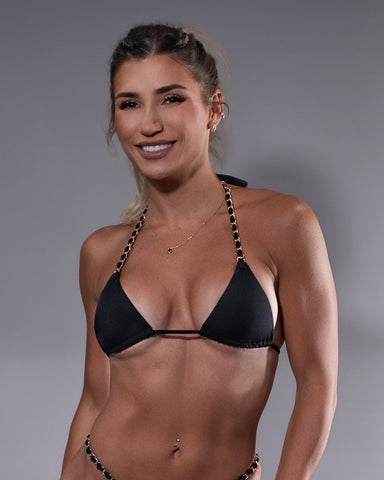
Two in-stock options from Violate the Dress Code cover the range. The Triple Threat Sports Bra ($42.99) layers straps for a secure, higher-support hold that suits faster paces and longer distances. For runners who want a softer, all-day feel with reliable coverage on easy miles, the best-selling Comfy AF Sports Bra ($42) earns its name without losing structure. You can compare the full lineup in the Sports Bras and Tops collection and size by your underbust measurement, not your everyday bra size, since athletic bands run differently.
How do you know your sports bra fits for running?
Do the jump test before you ever leave the house. Put the bra on, jump in place ten times, and shake your shoulders. If anything bounces, slides, or pinches, it is not your run bra. The band should stay level around your ribs when you raise your arms, and you should be able to fit one finger under it but not two.
Are Shorts or Leggings Better for Running?
Shorts are better for hot-weather and high-effort running because they release heat fast, while leggings win for cool mornings, sun protection, and chafe-prone thighs. Most women who run year round own both and choose by temperature and distance, not by rule.
The real decision is fabric and fit, not length. A seamless short with a curved, no-ride-up leg opening beats a bulky short every time, and a lightweight legging beats a thick compression one once the temperature climbs. The table below breaks down when each bottom earns its place in your rotation.
| Bottom | Best for | Temperature | Watch out for | In-stock pick |
|---|---|---|---|---|
| Seamless shorts | Speed work, summer miles, races | Warm to hot (65F and up) | Inner-thigh chafe if they ride up | Synergy Black Seamless Shorts ($48) |
| Lined or scrunch shorts | Everyday runs, glute coverage | Mild to hot | Liners that hold sweat | Sugar Shorts ($48) |
| Lightweight leggings | Cool mornings, sun cover, trails | Cold to mild (under 60F) | Overheating on hot days | Synergy Black Seamless Leggings ($68.99) |
| Capris or 7/8 length | Transitional weather, support | Mild (55F to 68F) | Compression that limits stride | Synergy seamless line |
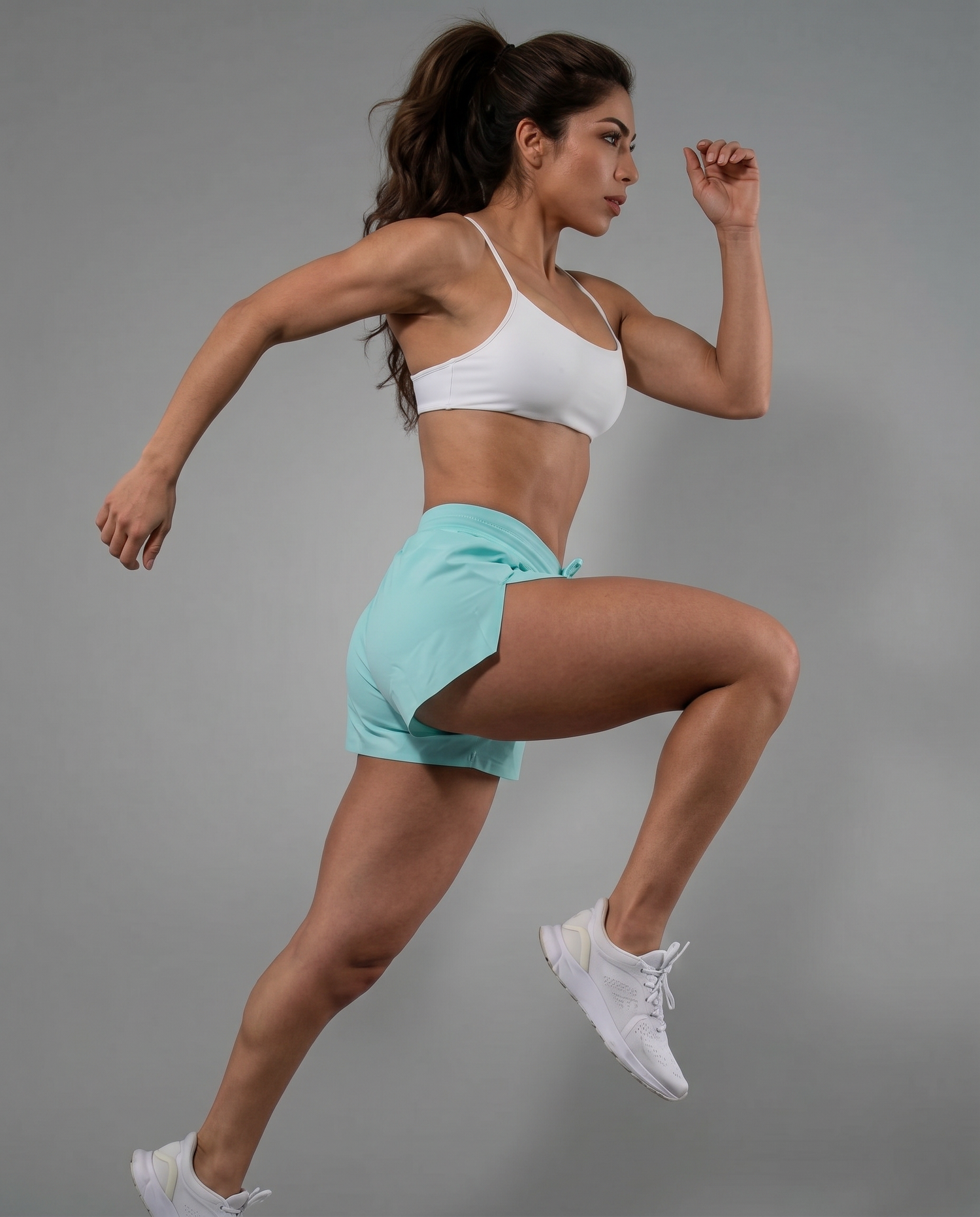
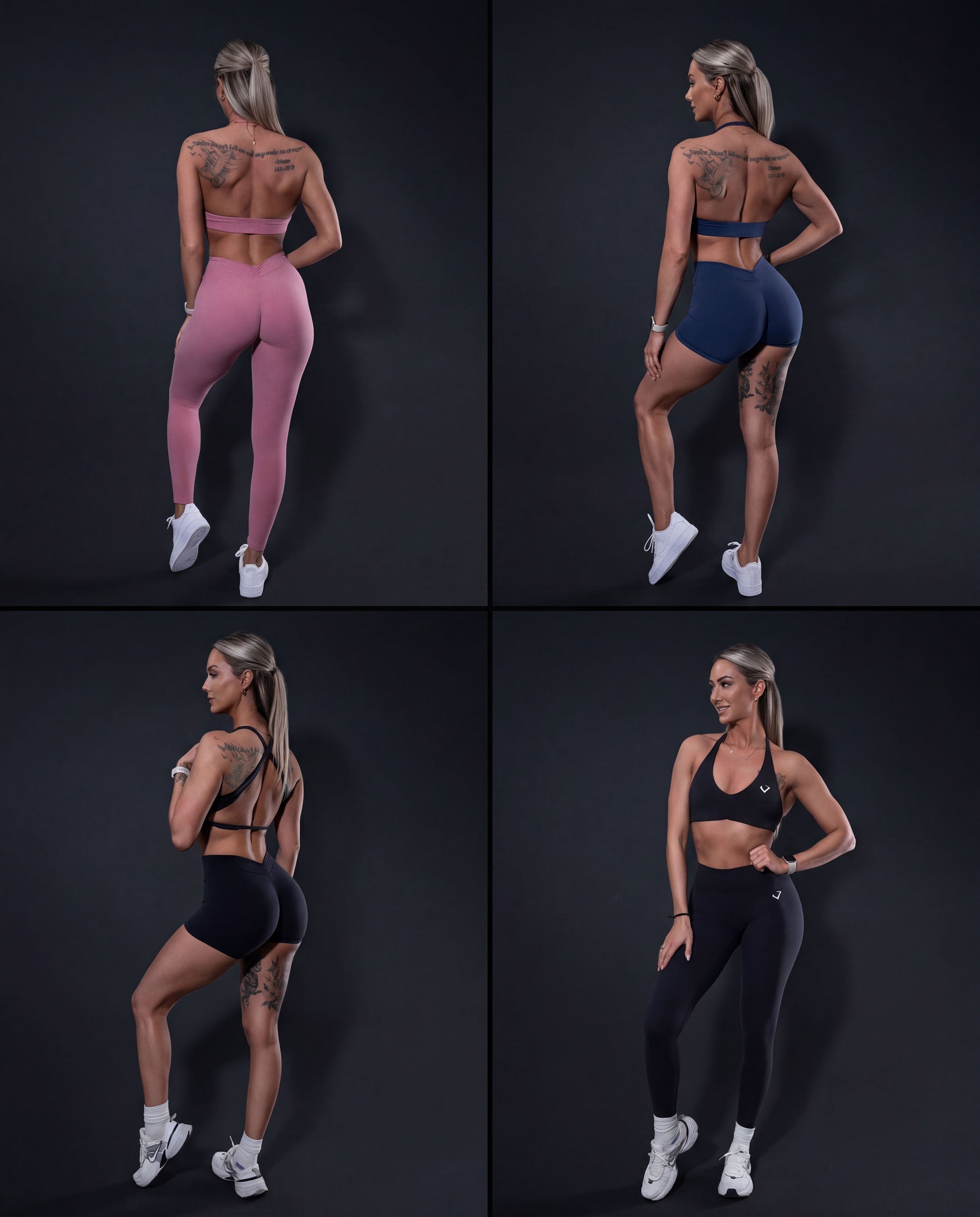
For summer running specifically, seamless shorts are the workhorse. The Synergy Black Seamless Shorts ($48) use a laser-cut, tubular-knit construction that removes the inner-thigh seam where most chafe starts, and the wide waistband stays flat through a stride. If you want more coverage and a sculpting fit for daily runs, the best-selling Sugar Shorts ($48) deliver. When the morning is cool or you are logging trail miles with sun exposure, reach for the Synergy Black Seamless Leggings ($68.99), the brand's highest-demand legging for a reason. Browse the full range in Synergy, Sugar, and the broader Leggings and Shorts edit.
What Fabric Is Best for Running Clothes in Summer 2026?
The best fabric for summer running is a lightweight, moisture-wicking synthetic blend, ideally seamless, that pulls sweat to the surface and dries fast. Avoid cotton for any run longer than a warmup, because it absorbs sweat, gets heavy, and turns into a chafe machine.
Here is the simple science. Cotton holds up to 27 times its weight in water, so a cotton tee that feels soft at the start becomes a wet, abrasive layer halfway through. Technical knits do the opposite. They move moisture along the fibers and out, where summer air evaporates it and cools you down. Seamless construction adds a second advantage that matters more the longer you run: with no stitched seams pressing into your skin, there is nothing to saw at your inner thigh, underarm, or waistband over thousands of repeated strides.
Three fabric features are worth paying for in 2026:
- Four-way stretch so the fabric moves with your full range of motion and snaps back instead of sagging.
- Squat-proof and run-proof opacity so light-colored bottoms do not go sheer when you stretch at the turnaround.
- A brushed or buttery hand-feel that stays comfortable against sweaty skin instead of getting scratchy.
Violate the Dress Code builds its Synergy line on a seamless, sweat-wicking knit designed exactly for this, which is why those pieces transition so cleanly from the gym floor to the running path.
What Tops Should You Wear for Running?
For running, choose a lightweight, fitted or relaxed tank in a technical knit, or a cropped top if you prefer airflow at the waist. The goal is breathability and zero underarm chafe, so skip heavy cotton and anything with a thick side seam.
Your top has one job on a run: move heat and sweat away while staying out of the way. A tank is the summer default because it frees your shoulders and lets air move across your back, which is where you dump the most heat. A fitted tank tucks neatly and will not flap; a relaxed tank gives you more airflow if you run hot. Both work, so choose by feel.
The Tease Tank ($46) is a premium, lightweight layer that drapes without clinging, which makes it an easy throw-on over a run bra for warmer days. If you prefer a cropped silhouette that keeps your midsection cool, the Essential Crop Top ($38.99) does the job. Explore more tops in the Tease collection and the Sports Bras and Tops collection. On the hottest days, plenty of runners skip the top entirely and run in a supportive bra alone, which is a perfectly good summer strategy when your bra offers the coverage you want.
How to Build a Running Outfit for Women, Run by Run
Match your outfit to the run, not the calendar. A 20-minute easy jog, a tempo session, and a long summer run each ask for slightly different gear. The quick reference below shows how to dress for the most common runs in 2026.
| Run type | Sports bra support | Bottom | Top | Extras |
|---|---|---|---|---|
| Easy or recovery run | Light to medium | Seamless shorts | Relaxed tank | Cap, sunscreen |
| Tempo or speed work | High | Fitted seamless shorts | Fitted tank or bra only | Sweat headband |
| Long summer run | High, encapsulating | Anti-chafe shorts | Breathable tank | Anti-chafe balm, water |
| Cool morning run | Medium | Lightweight leggings | Tank plus light layer | Light gloves if windy |
| Race day | High, tested in training | Shorts you have worn before | Top you have worn before | Nothing new on race day |
One rule deserves repeating because it ruins more races than any fabric ever could: nothing new on race day. Every piece you wear for a goal race should already have miles on it in training. New shorts can chafe, a new bra can rub, and a new top can ride up in a way you never noticed until mile ten. Test your kit on long runs first, then trust it.
For the runs that turn into errands, coffee, or a rest day on the couch, it is fine to switch into something you simply love wearing. The flared, lifestyle-leaning pieces in the new Flare Affair collection are made for exactly that post-run stretch of the day when comfort and a put-together look matter more than pace.
What Running Clothes Mistakes Should Women Avoid?
The most common running-clothes mistakes are wearing cotton, running in a bra with too little support, ignoring chafe points, and saving new gear for race day. Each one is easy to fix once you know to look for it.
Here are the errors that cost women comfort and miles, and the simple correction for each:
- Running in cotton. It soaks up sweat, gets heavy, and chafes. Switch to a technical, moisture-wicking knit for anything past a warmup.
- Underestimating support. A cute light-support bra is not a run bra. Match support to impact and do the jump test before you head out.
- Ignoring seams. Stitched seams at the inner thigh and underarm are the number one chafe culprit. Seamless construction removes the problem at the source.
- Choosing bottoms that ride up. A short that creeps will chafe and distract. Look for a curved leg opening and a wide, high waistband that stays flat.
- Wearing brand-new gear for a race or long run. Break everything in on training runs first. Nothing new on race day, ever.
- Forgetting sun and heat. Summer running means a cap, sunscreen, and lighter colors or fabrics. Overdressing is the fastest way to bonk in the heat.
Why Women Choose Violate the Dress Code for Running
Women choose Violate the Dress Code for running because the seamless construction that made the brand a favorite for lifting also solves the two biggest running problems: chafe and ride-up. The pieces are built to move, sweat, and hold their shape, and the fit is designed to make you feel confident at any pace.
The brand holds a 4.9-star average across more than 4,800 reviews from over 100,000 customers, and the theme that repeats most often in training feedback is exactly what runners care about: the seamless shorts and leggings stay opaque through deep bends and long strides, the waistbands stay put, and the fabric does not ride up. You can read that feedback for yourself on the Violate the Dress Code reviews page. Free domestic shipping kicks in on orders over $125, and exchanges and returns are free, so dialing in your running fit is low risk. Start with a supportive bra and one pair of seamless shorts, run a few miles, and build your rotation from there. You can browse everything in one place in the full women's collection.
The Best Running Clothes for Women: Your 2026 Checklist
To recap, the best running clothes for women in 2026 come down to a short, repeatable checklist you can use on any shopping trip:
- A medium to high support sports bra, fit-tested with the jump test.
- Seamless, sweat-wicking shorts for warm weather, plus lightweight leggings for cool mornings.
- A breathable technical tank or cropped top, never heavy cotton.
- Anti-chafe construction at every seam, especially the inner thigh.
- Gear you have already broken in before any long run or race.
Get those five right and the rest is personal taste. Your running clothes should disappear the moment you start moving, leaving you free to focus on the run, the summer air, and the next mile.
Frequently Asked Questions About Running Clothes for Women
What should women wear running in the summer?
In summer, wear a medium to high support sports bra, lightweight seamless shorts, and a breathable technical tank, plus a cap and sunscreen. Choose moisture-wicking fabric over cotton, lean toward lighter colors, and run in a supportive bra alone on the hottest days if you prefer maximum airflow.
Are leggings or shorts better for running?
Shorts are better for hot-weather and high-effort running because they release heat quickly, while lightweight leggings are better for cool mornings, sun protection, and runners prone to inner-thigh chafe. Many women own both and choose by temperature and distance rather than following a single rule.
What kind of sports bra do I need for running?
Running requires a medium to high support sports bra because it creates more vertical breast movement than most workouts. Look for a snug underband, straps that do not slip, and a compression or encapsulation fit. Always run the jump test before your first run to confirm nothing bounces or shifts.
Why do my running shorts ride up and how do I stop it?
Running shorts ride up when the leg opening is too loose or the waistband is too thin to stay anchored. Stop it by choosing seamless shorts with a curved leg opening and a wide, high-rise waistband, and make sure the fit is snug enough to move with you. A small amount of anti-chafe balm at the inner thigh helps on long runs.
Can I wear my gym clothes for running?
You can wear many gym pieces for running as long as they are sweat-wicking and seamless, but check two things first: the sports bra needs enough support for impact, and the bottoms need to resist chafe and ride-up over repeated strides. Heavy compression and thick cotton pieces that work for lifting often feel too hot and stiff for running.
What fabric is best for running clothes?
Lightweight, moisture-wicking synthetic knits are best for running because they pull sweat off your skin and dry fast. Seamless construction adds chafe protection, and four-way stretch keeps the fabric moving with you. Avoid cotton for anything longer than a warmup, since it absorbs sweat, gets heavy, and increases friction.

Leave a comment
All comments are moderated before being published.
This site is protected by hCaptcha and the hCaptcha Privacy Policy and Terms of Service apply.