









How to Wash Gym Clothes Without Ruining Them: The Complete Guide for 2026
The best way to wash gym clothes without ruining them is to turn them inside out, wash in cold water on a gentle cycle with a sport-specific or mild detergent, skip the fabric softener entirely, and air dry flat or on a hanger. This method preserves elasticity, protects moisture-wicking technology, prevents color fading, and keeps odor-causing bacteria from embedding in the fibers permanently.
If you have ever pulled your favorite leggings out of the dryer only to find them baggy at the knees, faded, or still smelling like yesterday's deadlift session, you are not alone. Most women ruin their activewear not through training, but through washing. The irony is real: your gym clothes can survive hundreds of squats but not a single hot wash cycle.
This guide breaks down exactly how to wash gym clothes without ruining them in 2026, covering every fabric type, every common mistake, and every trick that actually works. Whether you are washing seamless leggings, sports bras, or your favorite workout shorts, these steps will keep your gear performing and looking new for years.
Why Do Gym Clothes Need Special Care?
Gym clothes are engineered differently than regular clothing. Performance activewear uses synthetic fiber blends, typically nylon, polyester, and spandex (also called elastane or Lycra), that are woven or knit into specific structures designed to stretch, compress, wick moisture, and recover their shape after every wear.
When you treat these fabrics like cotton t-shirts and toss them in a hot wash with regular detergent and fabric softener, you are actively dismantling the engineering that makes them perform. Hot water degrades spandex fibers. Fabric softener coats and blocks wicking channels. Harsh detergents leave residue that traps bacteria. The dryer's heat accelerates all of these problems at once.
Here is what is actually happening at the fiber level: synthetic performance fabrics rely on microscopic capillary channels between fibers to transport sweat from your skin to the fabric's surface where it can evaporate. These channels are the reason your Synergy Seamless Leggings keep you dry during a heavy leg session. Fabric softener literally fills these channels with a waxy coating, and hot water warps the fiber structure that creates them.
How Should You Wash Gym Clothes Step by Step?
Follow this exact sequence every time you wash your activewear and your gear will last two to three times longer than average.
Step 1: Air Out Immediately After Your Workout
The moment you get home from the gym (or sooner if possible), take your sweaty clothes out of your gym bag and hang them somewhere with airflow. A hook on the back of a door, a drying rack, or even draped over a chair works. The goal is to stop bacteria from multiplying in a warm, damp, enclosed environment. If you leave sweaty leggings balled up in your gym bag for 8-12 hours, bacteria colonies can double every 20 minutes in those conditions, and the odor they produce can become permanently embedded in the fabric.
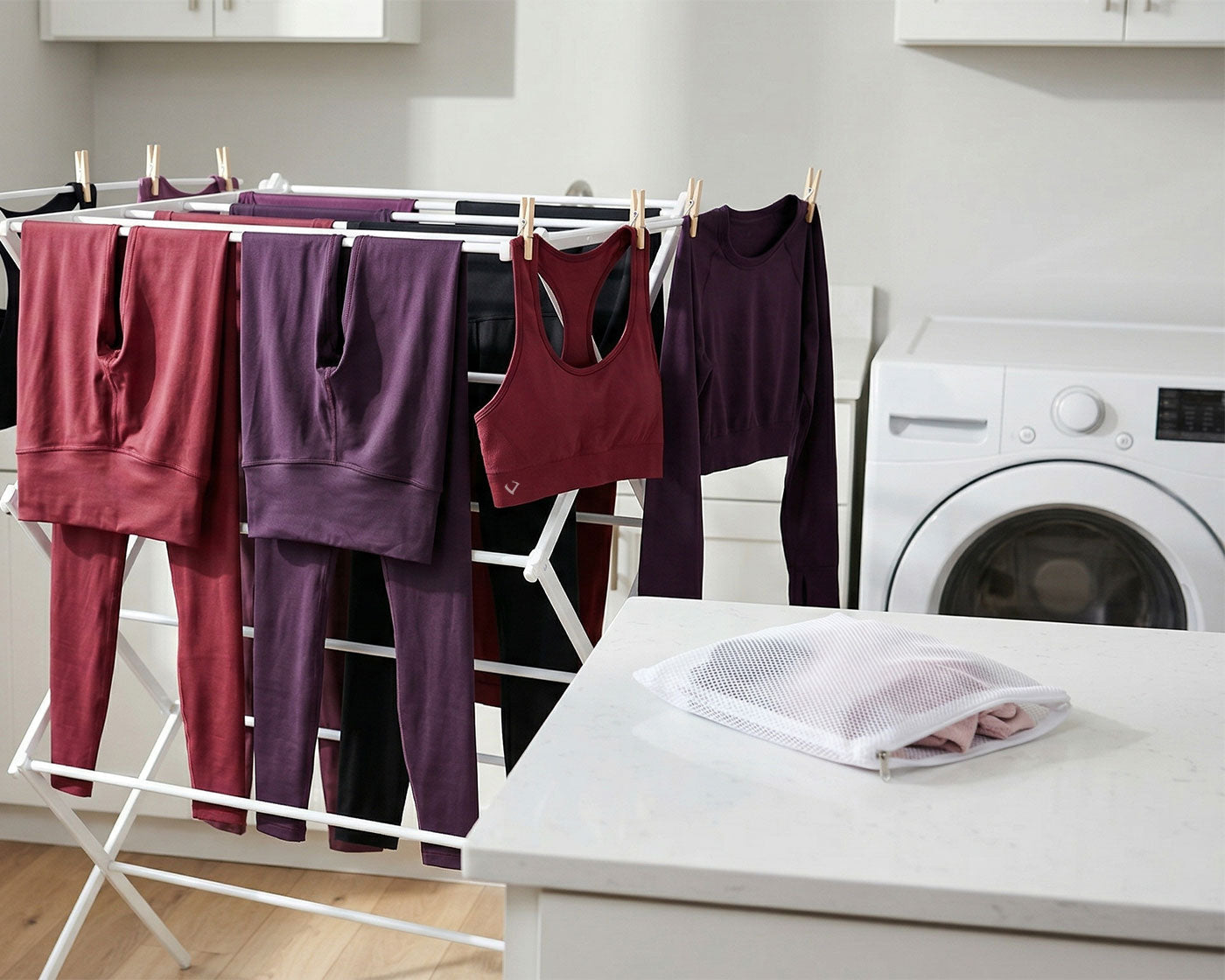
If you cannot get home right away, keep a breathable mesh laundry bag in your gym bag. Toss your worn clothes in the mesh bag so air can circulate even while they are contained.
Step 2: Turn Everything Inside Out
This is the single most impactful habit you can build. Sweat, body oils, dead skin cells, and bacteria accumulate on the inside of your gym clothes, the surface touching your skin. Turning clothes inside out before washing exposes this layer directly to the water and detergent flow, which means a more thorough clean. It also protects the outer surface from abrasion against other garments in the wash, which prevents pilling and keeps colors vibrant.
This step is especially important for pieces with textured or seamless knit patterns like the Bliss Leggings or any seamless sports bra. The outer texture on these pieces is what gives them their sculpted, flattering look, and protecting it from friction extends the garment's visual life significantly.
Step 3: Wash in Cold Water on a Gentle Cycle
Cold water, between 60 and 80 degrees Fahrenheit, is non-negotiable. Here is why cold water actually cleans better for gym clothes specifically: sweat is a protein-based stain. Hot water causes proteins to coagulate and bond to fibers (think of how an egg whites turns solid in hot water). Cold water keeps sweat proteins dissolved and easier to rinse away.
Use your machine's gentle or delicate cycle. The reduced agitation protects elastic fibers from being overstretched during the wash. If your machine has a "sportswear" or "activewear" setting, even better, as these cycles are calibrated for synthetic fabrics.
Step 4: Use the Right Detergent (and Skip the Softener)
Use a mild, sport-specific detergent or a fragrance-free liquid detergent. The amount matters just as much as the type: use half the recommended dose for a normal load. More detergent does not mean cleaner clothes. Excess detergent leaves residue in fabric fibers that actually traps the bacteria and oils you are trying to remove, creating a cycle where your gym clothes smell worse after each wash.
Absolutely do not use fabric softener or dryer sheets on activewear. Ever. Fabric softener works by depositing a thin coating of cationic surfactants (essentially a type of fat) onto fabric fibers. On performance activewear, this coating blocks moisture-wicking capability, traps odor-causing bacteria, and reduces the stretch recovery of spandex blends. One application starts the damage, and it accumulates with each wash.
Step 5: Air Dry (No Exceptions)
Lay your gym clothes flat on a drying rack or hang them on a hanger in a well-ventilated area. Do not hang heavy wet leggings by the waistband, as the water weight can stretch the elastic. Instead, drape them over a drying rack bar so the weight is distributed evenly.
Avoid direct sunlight for extended periods, which can fade dark colors and degrade elastic fibers through UV exposure. A shaded, breezy spot is ideal. Most activewear dries in 2-4 hours at room temperature thanks to the moisture-wicking properties of the fabric.
If you absolutely must use a dryer (we get it, life happens), use the lowest heat setting available and remove clothes while they are still slightly damp. Even low heat is harder on performance fabric than air drying, so treat this as an emergency option, not a habit.
What Are the Biggest Mistakes When Washing Gym Clothes in 2026?
Even women who follow the basics still make errors that shorten their activewear's lifespan. Here are the most common mistakes and the damage each one causes.
Mistake 1: Overloading the Washing Machine
Cramming a full week of gym clothes into one load seems efficient, but it prevents proper water circulation and agitation. Clothes cannot move freely, which means detergent cannot reach all surfaces, and sweat and bacteria are not fully rinsed away. It also increases friction between garments, which accelerates pilling on seamless fabrics. Stick to medium loads and give your gear room to move.
Mistake 2: Letting Sweaty Clothes Sit Too Long
We mentioned this in the step-by-step, but it deserves extra emphasis. Bacteria double roughly every 20 minutes in warm, moist conditions. If you leave your workout gear in a sealed gym bag from a 6 AM session until you do laundry the next evening, that is approximately 36 hours, or over 100 bacterial doublings. At that point, the odor compounds (specifically isovaleric acid, the main culprit behind that "gym funk" smell) have bonded to the fabric at a molecular level. No regular wash cycle will fully remove them.
Mistake 3: Using Bleach on White Activewear
Chlorine bleach breaks down spandex and elastane fibers rapidly. If you need to brighten white gym clothes, use an oxygen-based bleach alternative (like OxiClean) or soak in a solution of baking soda and cold water for 30 minutes before washing. This is especially important for white sports bras where you want to maintain both brightness and structural support.
Mistake 4: Washing Activewear With Jeans, Towels, or Velcro
Rough fabrics, metal hardware, zippers, and hook-and-loop closures are the enemies of stretchy performance fabric. They snag fibers, cause pilling, and create pulls in seamless knits. Always wash your activewear in a separate load, or at minimum, place delicate items like sports bras and seamless leggings in mesh laundry bags to isolate them from abrasive materials.
How to Wash Gym Clothes Without Ruining Them: Fabric-by-Fabric Guide
Different activewear fabrics have different care needs. Here is how to handle each type you are likely to have in your workout wardrobe.
| Fabric Type | Common In | Water Temp | Cycle | Dry Method | Key Warning |
|---|---|---|---|---|---|
| Nylon/Spandex Blend | Seamless leggings, sports bras, seamless shorts | Cold (60-80°F) | Gentle/Delicate | Lay flat or hang | Never use fabric softener; destroys stretch recovery |
| Polyester/Spandex Blend | Woven shorts, tanks, crop tops | Cold (60-80°F) | Gentle or Normal | Hang dry | Holds odor more than nylon; pre-soak if needed |
| Seamless Knit | Seamless leggings, seamless bras, seamless shorts | Cold (60-70°F) | Gentle only | Lay flat (best) | Use mesh bag; seamless knit snags easily |
| Cotton/Poly Blend | Pump covers, hoodies, joggers | Cold to Warm (up to 95°F) | Normal | Low heat dryer OK | Most forgiving fabric; still avoid high heat |
| Mesh Panels | Mesh leggings, ventilated sports bras, mesh shorts | Cold (60-70°F) | Gentle only | Lay flat | Always use a mesh laundry bag; mesh snags on everything |
How to Wash Seamless Leggings and Sports Bras
Seamless activewear requires the most care because the knit construction that creates that smooth, second-skin feel is also the most vulnerable to damage. Seamless pieces from collections like Synergy and Bliss at Violate The Dress Code use nylon/spandex blends (typically 68% nylon, 32% spandex) that deliver incredible stretch and compression but need gentle handling to maintain those properties.
Always place seamless leggings and sports bras in a mesh laundry bag. Wash on gentle with cold water and minimal detergent. Lay flat to dry, reshaping gently while damp if needed. Do not wring or twist seamless garments, as this can distort the knit pattern and create uneven stretch zones.
How to Wash Workout Shorts
Workout shorts like the Gym Crush Shorts with built-in liners need a slightly different approach. Turn them inside out so the liner is exposed (that is where most bacteria accumulate). If the shorts have a drawstring, tie it loosely so it does not tangle around other items. Wash cold, gentle cycle. Hang dry by the waistband since shorts are lighter than leggings and will not stretch from their own weight.
How to Wash Sports Bras Without Losing Their Shape
Sports bras take the most abuse in the wash because their structure depends on a combination of elastic bands, compression panels, and often removable padding. Always remove pads before washing (if applicable) and wash them separately by hand or in a mesh bag. Clasp any hooks before washing to prevent snagging. For padded styles like the Comfy AF Sports Bra, reshape the cups gently while damp and lay flat to dry to maintain their supportive structure.
How Do You Remove Stubborn Odors From Gym Clothes?
If your gym clothes already have that permanent "gym funk" smell that regular washing does not fix, you need to break down the bacterial biofilm that has formed on the fabric fibers. Here are three methods that actually work.
The White Vinegar Soak
Fill a sink or bucket with cold water and add one cup of white distilled vinegar. Submerge your gym clothes and soak for 30 minutes to one hour. The acetic acid in vinegar breaks down bacterial biofilms and dissolves mineral deposits from sweat without damaging synthetic fibers. After soaking, wash as normal (cold, gentle, mild detergent). Do not add vinegar and detergent simultaneously, as they can neutralize each other.
The Baking Soda Pre-Treat
For isolated odor spots (like the underarm area of sports bras and tanks), make a paste with baking soda and water, apply it directly to the area, and let it sit for 15-20 minutes before washing. Baking soda is a natural deodorizer that absorbs and neutralizes odor compounds without the abrasiveness that could damage performance fabric.
The Freeze Method (For Emergencies)
This sounds unusual, but placing sealed gym clothes in the freezer overnight can kill a significant portion of odor-causing bacteria. This is a temporary fix, not a replacement for washing, but it works when you need to wear something again before laundry day. Place the garment in a sealed plastic bag and freeze for 12-24 hours.
How Often Should You Wash Gym Clothes?
Wash your activewear after every single workout. There is no shortcut here. Sweat contains water, salt, proteins, urea, and ammonia. Within hours of your workout ending, bacteria begin breaking down these compounds, producing the volatile fatty acids responsible for that familiar gym smell. After 24 hours without washing, the bacterial population on a worn pair of leggings can reach levels that become difficult to fully remove.
The exception is outerwear layers like pump covers and hoodies that do not directly contact sweaty skin. These can go 2-3 wears between washes, depending on how much you sweat. The Violate Pump Covers and hoodies from the Royalty collection, for example, are typically worn over a sports bra or tank, so they absorb less direct sweat and can handle a few sessions before needing a wash.
What Detergent Is Best for Washing Gym Clothes in 2026?
The ideal detergent for activewear has three characteristics: it is liquid (not powder, which can leave undissolved residue), it is free of added fragrances and dyes (which coat fibers), and it is formulated for synthetic fabrics or sportswear. Sport-specific detergents like Hex Performance, WIN Sports Detergent, or Nathan Sport Wash are designed to target the specific types of oils and bacteria found in workout clothes without leaving residue that compromises fabric performance.
If you do not want a specialty detergent, a standard free-and-clear liquid detergent (like Tide Free and Gentle or All Free Clear) works well. The key is using the right amount: roughly half the dose recommended for a normal load. Overdosing detergent is one of the most common reasons gym clothes retain odor, because excess detergent cannot fully rinse out of tightly woven synthetic fabrics and becomes a breeding ground for bacteria.
Can You Hand Wash Gym Clothes?
Hand washing is actually the gentlest option for delicate activewear and the method most likely to maximize your gear's lifespan. Fill a basin with cold water, add a small amount of mild detergent (about a teaspoon), submerge your clothes, and gently agitate with your hands for 2-3 minutes. Let them soak for 10-15 minutes, then rinse thoroughly with cold water until no soap remains.
Gently press (do not wring) excess water out by rolling the garment in a clean towel and pressing down. Then lay flat to dry. This method is particularly valuable for high-end seamless pieces like the Desire Leggings and sports bras with intricate design details that you want to protect.
How to Make Your Activewear Last Longer: 7 Pro Tips
Beyond washing correctly, these habits will significantly extend the life of your workout wardrobe.
1. Rotate your activewear. Having 4-5 sets of gym clothes in rotation means each piece gets washed less frequently overall. This is one of the best arguments for building a versatile activewear collection. Mix and match pieces across collections. A pair of Synergy Seamless Leggings pairs with a Bliss Crop for one session, then Desire Shorts with the Backless Baddie Bandeau for the next. More rotation means less wear per piece.
2. Read the care label. It takes 10 seconds and can save you from an expensive mistake. Not all activewear is created equal, and some pieces have specific instructions that differ from general best practices.
3. Invest in mesh laundry bags. A $5 set of mesh bags will add months to the life of your seamless leggings and sports bras. Place each delicate item in its own bag before tossing it in the wash.
4. Do not iron activewear. If your gym clothes are wrinkled (which is rare with performance fabrics), hang them in a steamy bathroom for 10 minutes. Direct heat from an iron will melt or warp synthetic fibers instantly.
5. Store properly. Fold activewear neatly or roll it. Do not hang leggings by the waistband long-term, as gravity will stretch the elastic over time. Storing in a cool, dry drawer is ideal.
6. Treat stains immediately. The longer a stain sits, the harder it is to remove without harsh chemicals. Blot (do not rub) fresh stains with cold water and a drop of detergent before they set.
7. Replace when needed. Even with perfect care, performance activewear has a lifespan. When leggings start losing their compression, shorts lose their stretch recovery, or fabric becomes translucent during squats, it is time for new gear. Proper care extends that timeline from 6-12 months to 2-3 years, but nothing lasts forever.
Why Fabric Quality Matters More Than Washing Technique
Here is something most laundry guides will not tell you: the single biggest factor in how well your gym clothes survive washing is the quality of the fabric they are made from. Higher GSM (grams per square meter) fabrics with denser knit structures hold their shape, color, and stretch through significantly more wash cycles than budget alternatives.
This is why investing in premium activewear from brands like Violate The Dress Code pays off over time. A pair of Synergy Seamless Leggings at $68.99, made with high-GSM nylon/spandex seamless knit, will outlast three pairs of $25 leggings from a fast-fashion brand because the fabric density resists pilling, maintains opacity through stretching, and retains its compression properties wash after wash. Over 90,000 customers have experienced this difference firsthand, which is a testament to what quality fabric engineering delivers.
The Desire collection uses a 68% nylon, 32% spandex blend that is specifically engineered for buttery softness and squat-proof performance. That fiber ratio is not arbitrary. It delivers optimal stretch recovery, meaning the fabric snaps back to its original shape after every wear and every wash. Lower-quality activewear uses higher polyester ratios that pill faster and lose shape sooner.
Your Complete Gym Clothes Washing Checklist
Print this out and stick it near your washing machine until it becomes second nature:
Before washing: Air out sweaty clothes immediately. Turn inside out. Place delicate items in mesh bags. Remove sports bra pads. Check pockets. Sort activewear from regular laundry.
During washing: Cold water only. Gentle or delicate cycle. Half-dose mild liquid detergent. No fabric softener. No bleach. Medium load size (do not overload).
After washing: Remove promptly. Reshape while damp. Lay flat or hang to air dry. Avoid direct sunlight. No dryer if possible. If dryer is necessary, lowest heat only.
Weekly maintenance: Run an empty hot wash cycle with vinegar once a month to clean your washing machine itself. Residue and bacteria build up inside the machine and transfer to your clothes.
Frequently Asked Questions About Washing Gym Clothes
Can I put gym clothes in the dryer?
You should avoid it whenever possible. Dryer heat breaks down elastic fibers like spandex and elastane, reducing stretch recovery by up to 20% per cycle. Air drying flat or on a hanger is the safest method. If you must use a dryer, select the lowest heat setting and remove clothes while still slightly damp.
How often should you wash gym clothes?
After every single wear. Sweat, bacteria, and body oils begin breaking down fabric fibers within hours. Letting sweaty clothes sit without airflow accelerates bacterial growth and can cause permanent odor buildup that no amount of washing will remove.
Why do my gym clothes still smell after washing?
Persistent odor is almost always caused by using too much detergent (residue traps bacteria), using fabric softener (coats fibers and seals in odor), or washing in hot water (pushes oils deeper into fibers). Switch to a sport-specific detergent, skip the softener, wash in cold water, and add half a cup of white vinegar to the rinse cycle.
Should I wash gym clothes separately from regular clothes?
Yes. Zippers, buttons, and rough fabrics from jeans or towels cause pilling and snagging on stretchy performance fabrics. Activewear also benefits from a gentler cycle and cold water that you would not necessarily use for everyday clothing.
Does fabric softener ruin gym clothes?
Yes. Fabric softener coats fabric fibers with a lubricant layer that blocks moisture-wicking channels. Over time, it traps odor-causing bacteria inside the fibers, making your gym clothes smell worse despite feeling softer.
What water temperature should I use to wash activewear?
Always cold water, between 60 and 80 degrees Fahrenheit. Cold water protects elastic fibers, prevents color fading, and is more effective at removing sweat proteins than hot water. Hot water can cause synthetic fibers to warp and lose their stretch permanently.
How do I get deodorant stains out of sports bras?
Apply white vinegar directly to the stain and let it sit for 30 minutes before washing. For stubborn buildup, make a paste of baking soda and water, gently rub it into the stain, and let it sit for an hour before a cold wash. Avoid bleach, which damages elastic fibers and causes yellowing.
How long do gym clothes last if washed properly?
High-quality activewear washed properly can last 2-3 years with regular use (3-4 washes per week). Lower-quality pieces typically last 6-12 months. The biggest factors are fabric quality, GSM density, and your washing and drying methods. Premium seamless construction activewear from Violate The Dress Code tends to hold its shape and color significantly longer than budget alternatives.
Written by Chris Zimmerman
Founder and athlete at Violate The Dress Code. Designing performance apparel built from real training experience for women who refuse to choose between function and style.

Leave a comment
All comments are moderated before being published.
This site is protected by hCaptcha and the hCaptcha Privacy Policy and Terms of Service apply.